Download

Download Manuals, Datasheets, Software and more:

DOWNLOAD TYPE
MODEL or KEYWORD

Feedback

High-Performance Oscilloscope Probes for Every Signal Type

Oscilloscope Probes
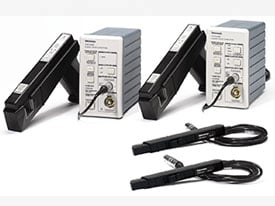
Connector Types

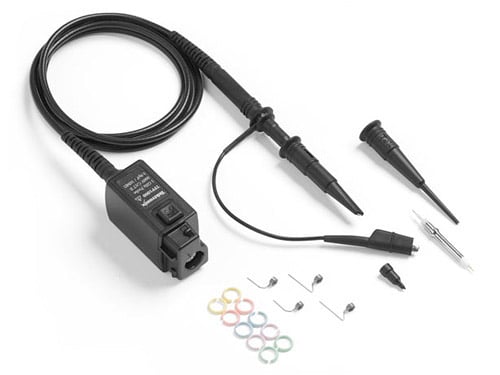
Oscilloscopes have different probe interfaces and knowing which one you have can help you find the best probe for your application. Adapters are available to connect older TekProbe probes to the latest TekVPI or TekConnect interfaces. Download our probe selection guide for more info on interfaces and adapters.
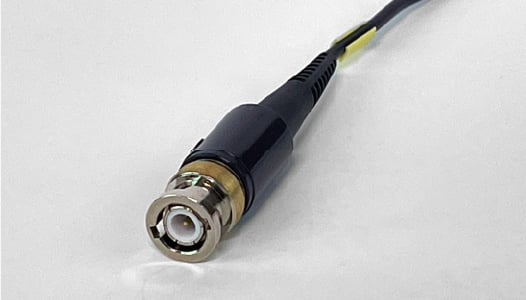
Standard BNC
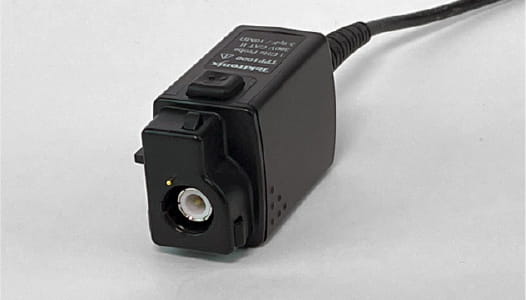
Standard BNC

Connects with most general-purpose oscilloscopes, but does support automatic scaling or provide power to active probes.
Standard BNC — TekVPI®

Standard BNC — TekVPI®

Offers power and bi-directional communication for scaling, compensation, deskew, degauss and zeroing. Used on many current Tektronix oscilloscopes.
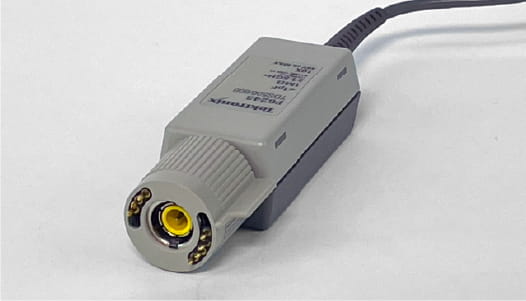
TekConnect®

TekConnect®

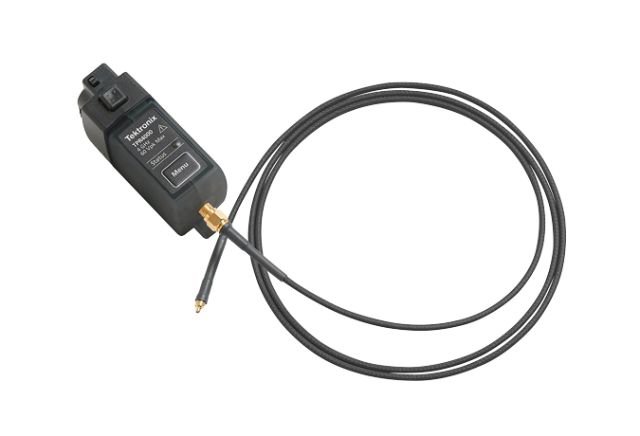
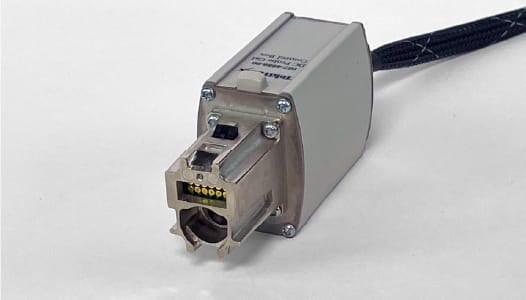
For bandwidth from 4 GHz to 25 GHz, this high-bandwidth interface provides power and bi-directional communication. It is used on today’s high-performance oscilloscopes.
TekProbe™ BNC

TekProbe™ BNC

Communicates scaling information and provides power for active probes. Used on Tektronix scopes from the 1980s to early 2000s.

How to Choose an Oscilloscope Probe

For accurate readings and reliable performance, it’s important to select a probe that is well matched to your specific application and overall testing setup.
Standard BNC

1. Know Your Signal

Find the highest frequency and voltage you need to measure.
Standard BNC — TekVPI®

2. Select Probe Type

Choose a probe based on what you’re measuring and the signal conditions. (Current, Passive, Logic, etc.)
TekConnect®

3. Choose Bandwidth

Pick a probe with at least the same bandwidth as your signal (ideally 1.5–5× higher).
TekProbe™ BNC

4. Pick the Right Attenuation

  • Use 10X for most signals and higher voltages.
  • Use 1X for low-level signals, but expect more loading.
TekProbe™ BNC

5. Check Voltage Rating

Make sure the probe can safely handle your signal’s peak voltage.

TekProbe™ BNC

6. Match to Your Scope

Confirm compatibility with your oscilloscope’s input resistance and capacitance.

Resources

Video

Common Tips and Tricks for Oscilloscope Probes

Learn the science behind passive scope probes and ground leads
Whitepaper

ABCs of Probes Primer

Learn about the fundamentals of probes and discover how to choose the right probe for your oscilloscope
Product Selector Guide
 

Need help choosing the right probe?

Click here for an interactive tool to determine the correct probe for your need. Or download a PDF of all our probes for future reference.

Interactive Probe Selector

Frequently Asked Questions (FAQs)

What are the different types of oscilloscope probes?

Oscilloscope probes may be classified by type or measurement function. Types of oscilloscope probes include passive probes which use only passive components in the signal path, and active probes which include active components, such as amplifiers, in the signal path. Because they include active components, active probes require power from either the oscilloscope, a battery or an external power supply. Measurement functions include single-ended voltage, differential voltage, current, logic and optical measurements.

What are the most common probes used with an oscilloscope?

The most common probes used with an oscilloscope are passive voltage probes. They are simple, relatively inexpensive, and easy to use. They do not require an external power source or battery. In order to reduce loading of devices under test, and to provide wide measurement ranges, most passive voltage probes are 10X probes - that is, they attenuate the signal by a factor of 10. For high-frequency signals or when measuring sensitive circuits with a low output impedance, active voltage probes may be required.

What are 1X and 10X on oscilloscope probes?

The 1X and 10X factors on an oscilloscope probe refer to the attenuation of the probe. A 1X probe does not attenuate the signal, while a 10X probe attenuates the signal by a factor of 10. A 10X probe is often used to reduce the loading effect of the probe on the circuit being measured and to provide higher measurement range. For example, if the input signal is 5 volts and a 10X probe is used, the oscilloscope will measure 0.5 volts on its front end. Some oscilloscopes and probes automatically scale the reading on the display, while others require the user to multiply readings by 10.

What are common tips and tricks for oscilloscope probes?

For probing tips and tricks, watch this video

Power probing techniques and tips, watch this video