

연락처
텍트로닉스 담당자와 실시간 상담 6:00am-4:30pm PST에 이용 가능
전화 문의
9:00am-6:00PM KST에 이용 가능
다운로드
매뉴얼, 데이터 시트, 소프트웨어 등을 다운로드할 수 있습니다.
피드백
High-Efficiency Power Supply Testing for Next-Generation Data Centers

High-Efficiency Power Supply Testing for Next-Generation Data Centers
Executive Summary
Modern data centers face unprecedented power and efficiency challenges. These demands are driven by AI, high-performance computing (HPC) and hyperscaler architectures. The applications pack more processors into each rack, pushing total power densities and cooling requirements to new heights. Tektronix test solutions are engineered to meet these challenges head-on. The Tektronix line of EA Elektro-Automatik bidirectional, regenerative power systems (EA-PSB series) and electronic loads (EA-ELR series) achieve up to 95.5% energy recovery efficiency, significantly exceeding the efficiency of competitive units. This efficiency translates to tens of kilowatts saved per megawatt of testing, cutting electricity costs and heat load.
Additionally, the Tektronix line of EA modular, scalable power modules cover a significantly wider voltage range (50 V to 2000 V) and power range (hundreds of watts to multi-megawatts), allowing for rapid reconfiguration to meet various test needs. Likewise, the water-cooled designs ensure reliable operation in challenging lab or production environments.
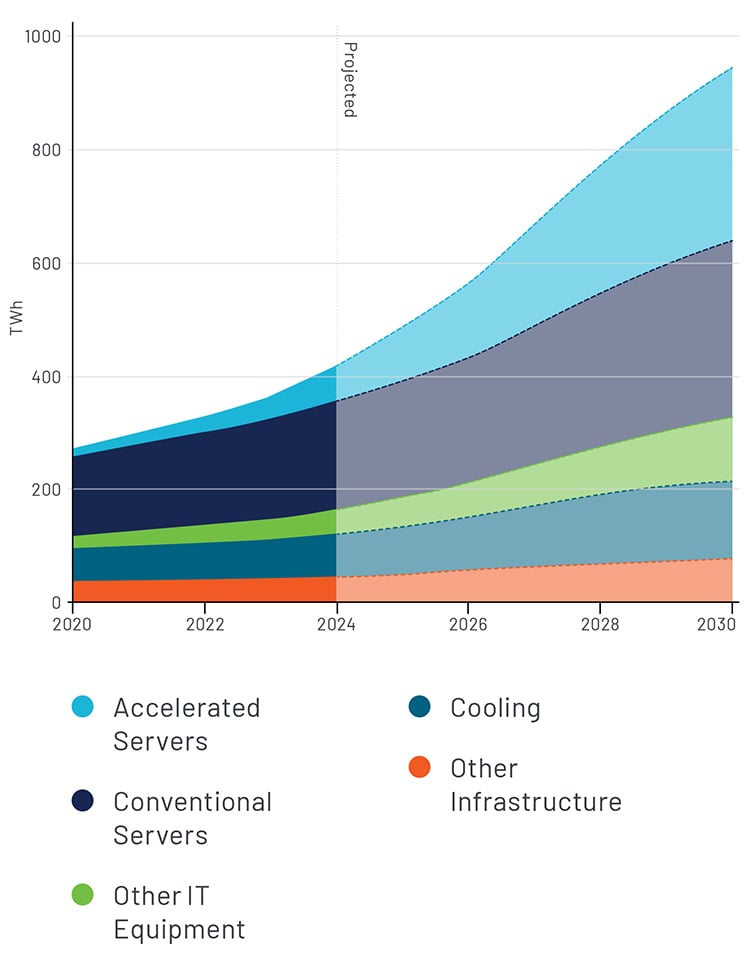
Figure 1: This image shows the rise in global data center electricity consumption, by equipment, Base Case, 2020-2030.
Market Context and Testing Challenges
Data centers are rapidly evolving. AI servers and large language model (LLM) training can consume hundreds of kilowatts per rack, far exceeding the power consumption of traditional enterprise servers. Additionally, IoT and big-data services drive higher rack densities and cooling demands due to the volume of data they generate. As the International Energy Agency (IEA) industry report notes1, data center power draw is exploding with the advent of artificial intelligence and HPC. This is driving an innovation of power architectures and more efficient supplies. Designers must now balance not only peak power delivery but also power efficiency and thermal constraints in each rack.
Data center construction is surging worldwide as companies race to house massive AI workloads. The scale is staggering. Reports say it is committing roughly $80 billion to build AI-enabled data centers, while OpenAI and hardware partners have inked multi-gigawatt deals to deploy entire AI campuses. Those corporate commitments are creating a global boom in purpose-built, high-power sites that are already reshaping local economies, power grids and the map of internet infrastructure. There are several new standards and initiatives that illustrate this trend:
Open Compute Project (OCP)
Data center leaders (Meta, Microsoft, Google, etc.) have defined OCP specifications2 that call for standardized, efficient and modular rack components. These include new requirements for power-supply efficiency, physical form factors and energy reuse. OCP emphasizes reducing wasted energy and enabling flexible, composable rack designs that are IEA compliant. Therefore, test engineers must ensure that new PSUs meet these OCP criteria under realistic load conditions.
80 PLUS Ruby Certification
The emerging 80 PLUS Ruby (or Titanium+) certification targets extreme efficiency (roughly ≥96% at key load points) for data center PSUs. It targets a minimum efficiency of 95.5% at 50% load and 90% efficiency at light loads under high-voltage conditions. Achieving Ruby-level efficiency requires meticulous validation of loss mechanisms. Your equipment must be capable of achieving these minor losses.
DC Grids and Microgrid Integration
Hyperscale data centers are beginning to adopt higher voltage DC distribution (e.g., 800 V DC architectures) and on-site DC microgrids to improve overall efficiency. For example, NVIDIA and others are developing 800 V/1500 V (future trend) intermediate DC buses between facility power and server racks.3 This introduces new test cases: testing high-voltage DC-DC converters as well as inverter modules that feed the 50 V loads inside racks. In short, power-supply testing now spans 50 V load rails up to kilovolt DC grids.
Each of these trends presents test challenges, including high currents (hundreds to thousands of amps), high voltages (up to 2000 V) as well as high power (up to 2 MW), regenerative energy flows, fast transient loads and precise efficiency measurements. Many power test units on the market often fall short – for example, many regenerative loads top out at ~92% efficiency and require multiple boxes in parallel to reach high currents. Tektronix recognized this market shift early. The Tektronix EA Elektro-Automatik suite of high-power DC supplies and loads is optimized for these new data center requirements. The systems’ compliance with OCP and 80 PLUS standards can be tested, supporting next-gen DC architectures and simplifying rigorous efficiency and reliability testing that other conventional equipment struggles to deliver.
Key Application Scenarios
Several concrete test scenarios demonstrate the need for specialized equipment in data center PSU testing. We briefly outline the most important cases that Tektronix solutions address:
High-Power Testing of 800 V Systems
Next-generation AI power racks use a ~800 V DC intermediate bus. Power supplies delivering hundreds of kilowatts or even megawatt power levels operate at these high voltages. For example, a 1 MW PSU at 800 V is ~1250 A. Validating such units requires test equipment rated above 800 V and capable of handling multi-hundred-kilowatt power. The Tektronix EA 1000 Elektro-Automatik V-series modules (e.g., the EA-PUB and EA-PUL 11000-160) meet these needs head-on. These units provide 60 kW at up to 1000 V and 160 A in a 6U frame, and they can be paralleled for higher power.
Power Shelf/Power Train System Testing
Data center racks often use power-shelf architectures (multiple PSUs feeding a bus, with redundancy). Testing a full shelf requires handling large cumulative current. For instance, a shelf might have four 20 kW PSUs paralleled, outputting 80 kW at 48 V (over 1600 A).
A test bench could use three EA-PSB 10080-1000 units in parallel (3×30 kW = 90 kW, 3000 A total current capacity) to source that load. Each unit’s output can either be paralleling the current, or each unit can test one PSU at a time. The multi-channel, modular nature makes it easy to adapt: rack cables simply split to the PSUs or the inputs.
PSU Efficiency Validation
Data center power supplies must hit high-efficiency targets across load ranges. Testing for 80 PLUS Ruby or OCP compliance involves measuring tiny losses (often <5% of output power). With the Tektronix EA Elektro-Automatik power supplies and regenerative loads, losses can be quantified without dissipating excess heat. Engineers can sweep load currents and compare these with the introduced currents. The 95.5% regeneration capability of EA-PSB units means nearly all input power is used for the test. In contrast, a typical regenerative unit at ~92% efficiency would waste ~80 kW of the megawatt input – making test cases costly. This high-efficiency design thus simplifies meeting and verifying Ruby-level specs while outperforming other competitors on the market.
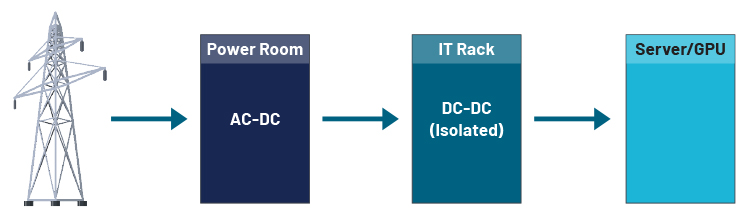
Figure 2: End-to-end data center power architecture—from 13.8 kVac grid input to an ~800 V DC intermediate bus and isolated DC-DC conversion to 54/12 V rails— highlighting where next-generation AI power racks demand specialized, high-power test equipment rated above 800 V to validate multi-hundred-kilowatt PSUs.
VRM (Voltage Regulator Module) Testing
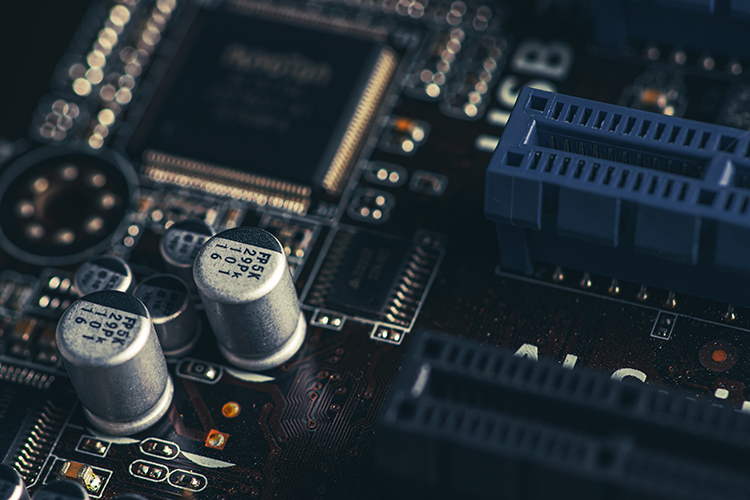
Figure 3: High-density server power electronics at the board level, where precise regulation and fast transient response drive the need for accurate PSU and VRM testing in next-generation data centers.
Inside servers, VRMs step down from 48V to the 1V rails needed by CPUs/GPUs. VRM engineers need to test modules at the 48 V input and at currents of hundreds of amps. An EA-ELR 10080-1000 can emulate the server load on the VRM output side by providing fast, programmable current draw that follows a CPU power trace. Meanwhile, an EA-PSB simulates the 48 V supply feeding the VRM. This two-box setup verifies how the VRM handles load transients (ramp ups from idle to full load) and its contribution to overall efficiency. Because GPUs can suddenly draw or shed ~500 A within milliseconds, such test capabilities are essential.
End-of-Line (EoL) Test
Mass production of PSUs for servers demands high throughput test stations. A test bench may need to drive tens of units per hour, requiring automated switching and simultaneous handling of multiple devices-under-test (DUTs). The Tektronix EA Elektro-Automatik systems, with their compact and modular design and easy stacking capability, allow multiple PSUs to be tested in parallel from one rack. Furthermore, with the PSB 20000 series, with their 3-output design, it is possible to test 3 independent DUTs with only one unit simultaneously. Equipment can be rapidly reconfigured via the software interface for different test plans, maximizing throughput. Also, because of the regenerative design, factories with AC systems remain manageable even when racks are under continuous test.
Tektronix Solution Overview and Advantages
The Tektronix EA Elektro-Automatik series offers a comprehensive lineup of regenerative power supplies and loads specifically designed for data center PSU testing.
Ultra-High Energy Recovery Efficiency
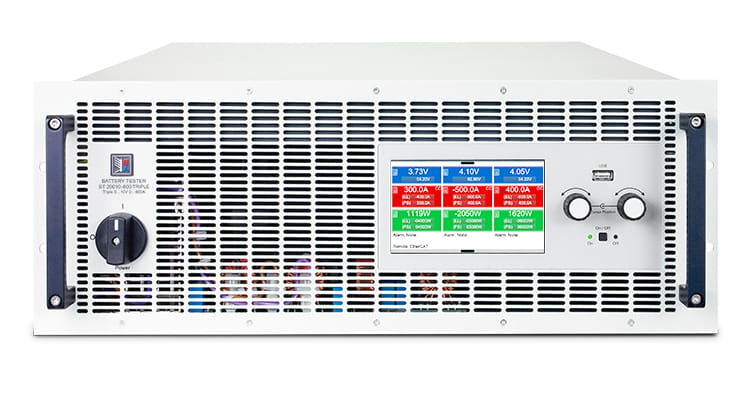
Figure 4: The EA-BT 20000 Series is optimized for battery testing and battery simulation.
EA-PSB series bidirectional power supplies achieve up to 95.5% energy regeneration back to the grid under ideal conditions. In practice, this means far less wasted energy (and heat) during testing. Lower waste translates to lower cooling needs and operating costs. For example, at a 1 MW test level, higher efficiency can save on the order of 30–40 kW of power compared to a typical 92% unit. Over the long test run, this is a nontrivial amount of electricity.
Modularity and Scalability
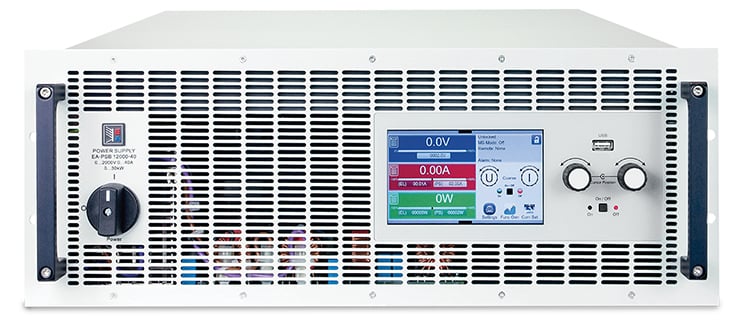
Figure 5: The EA-PSB Bidirectional Power Supplies recover energy with >96% efficiency
The Tektronix EA Elektro-Automatik product family spans from hundreds of watts up to the multi-megawatt range. Each module (e.g., the 4U EA-PSB 11000-80) is compact, so multiple modules can be rack-mounted side by side. Modules can be connected in parallel to multiply the current output, or in series to multiply the voltage. In practice, this lets one quickly build test systems from, say, a single 30 kW module up to several racks totaling 3.84 MW as needed. The modular approach also means you can swap in a higher-power unit when test requirements change, instead of buying a whole new bench.
Wide Voltage Range
The line of Tektronix EA Elektro-Automatik modules cover low- to high-voltage applications seamlessly, while standard units cover output voltages ranging from 60 V to 2000 V. If a higher voltage is required, two units can be stacked in series for up to 3000 V. This means systems can test everything from 48 V VRMs to emerging 800 V–1500 V DC bus supplies. One investment can thus serve multiple future data center power architectures.
High Current Capability
Some data center loads demand extreme currents. Tektronix’s EA-PSB and ELR 10080-1000 models provide up to 1000 A in a single 4U rack unit (higher-current loads can be achieved by paralleling these modules). For perspective, testing a 50 V rail at 600 A is already 30 kW. A competitor might require two separate units to reach 600 A, thereby doubling the investment and operational costs. The single-box capability enables simpler setups and reduces capital spend.
Water Cooling and Safety Considerations
Data center engineering labs or production floors can be quite hot. The Tektronix line of EA Elektro-Automatik equipment offers optional water-cooling devices for many high-power models. Water cooling improves reliability, reduces the heat dissipation drastically, and allows the equipment to run at full rated power without overheating or loud fans. This is a distinct benefit when running long duration tests in a lab environment or in production. It also reduces audible noise, making for a better working environment. Also, Tektronix EA Elektro-Automatik power supplies include programmable safety features (alarm conditions and limits) to protect DUTs. These factors matter in a lab or production floor, where regulations and reliability are top-of-mind.
Software and Control
All units come with intuitive control software and standard interfaces (Ethernet, USB, EtherCAT among others). Engineers can script complex test sequences, perform remote monitoring and integrate with automated test frameworks. Combined with features like multiple independent channels per unit, this software flexibility further boosts throughput.
Overall, the Tektronix test throughput value proposition centers on “right-sized” solutions: the perfect match of voltage, current and efficiency for the application. By contrast, designers using competitor gear often buy bigger-than-needed setups or run multiple smaller units in parallel, adding complexity.
Highlighted Tektronix Test Products
EA-PSB 10080-1000 (4U)
A bidirectional DC power supply/charger capable of 30 kW output at up to 1000 A (at low voltage). In regenerative mode, it can sink power from a DUT and feed it back to the mains. This unit is ideal for testing 48 V PSUs. Its 95.5% efficiency dramatically cuts test energy loss. Official product overview.
EA-ELR 10080-1000 (4U)
A programmable electronic DC load rated 30 kW, up to 1000 A. It simulates server load profiles on power supplies or battery backup limits. The ELR quickly switches load current to mimic CPU/GPU dynamics. It supports constant current, constant power and custom waveform modes. Official product overview.
EA-PUB 11000-160 (6U)
A high-voltage DC power supply in the Tektronix EA Elektro Automatik industrial series. It delivers 60 kW at voltages up to 1000 V. This model suits very high-voltage DC rack power needs (e.g., feeding an 800V DC bus or discharging HVDC power supply units). It has high stability and precise control, useful for characterizing new converter modules. Official product overview.
The Tektronix EA Elektro-Automatik Modular Rack System
Results and Tektronix Advantages
-
Results and Tektronix Advantages
The 95.5% regenerative efficiency of the bidirectional systems means that less energy is wasted as heat. For example, regenerating 95.5% of a 500 kW test means only 17.5 kW is lost, versus 40 kW lost at 92%. During hundreds of test hours, this adds up to significant TCO savings and reduced cooling burden.
-
Higher Throughput with Multi-DUT Testing
The Tektronix EA Elektro-Automatik units offer compact size and multi-channel capability that allow parallel testing of multiple power supplies or parallel operation on one DUT. Customers report testing throughput up to two to four times higher than with single-DUT setups. Small form factors mean that even a dense lab can fit multiple test racks side by side.
-
Reliable AI-Ready PSU Validation
Modern data center PSUs must handle rapid load changes and maintain tight voltage regulation under high current. Fast-response loads and supplies accurately reproduce these conditions. Because the equipment is built for continuous high-power use (with water cooling if needed), test results are consistent and repeatable. This gives designers confidence that a PSU will perform as expected in the field.
-
Footprint and Cost Savings
A key advantage of the power module design is a smaller physical footprint for a given power. Fewer modules translate to lower rack-space usage and simpler cable management. Combined with lower long-term energy costs, the systems often have a lower total cost of ownership (TCO) than competitor systems, despite similar initial capital expense. For instance, achieving 1000 A might need just one 4U unit, whereas a competitor might require two 4U units (doubling required space). Over a facility of dozens of racks, these savings scale significantly.
-
Future-Proof Flexibility
Because Tektronix offers test instruments covering up to 2000 V and multiple MW, a single lab investment can adapt to future architectures. Whether it’s tomorrow’s 800 V GPU rack or a 1500 V interconnect link, Tektronix is ready. The same hardware can be reused across projects, which is particularly appealing to engineering teams planning for evolving standards.
Conclusion
AI and HPC have transformed data center power design, and test equipment must keep pace. Tektronix delivers that next-generation test capability. The Tektronix line of EA Elektro-Automatik products combine extreme efficiency (up to 95.5% regeneration), broad voltage/current range and modular flexibility in a proven, user-friendly package. That means data center power supply manufacturers and system designers can meet Open Compute Project and 80 PLUS Ruby targets, handle novel DC architectures and do so at lower long-term cost.
References
External
- IEA (2025), Global data centre electricity consumption, by equipment, Base Case, 2020-2030, IEA, Paris https://www.iea.org/data-and-statistics/charts/ global-data-centre-electricity-consumption-by- equipment-base-case-2020-2030, Licence: CC BY 4.0
- https://www.opencompute.org/projects/ rack-and-power
- https://developer.nvidia.com/blog/nvidia-800-v- hvdc-architecture-will-power-the-next-generation- of-ai-factories/