


Vier Innovationen, die hochkanalige, hochpräzise Halbleiterprüfungen beschleunigen
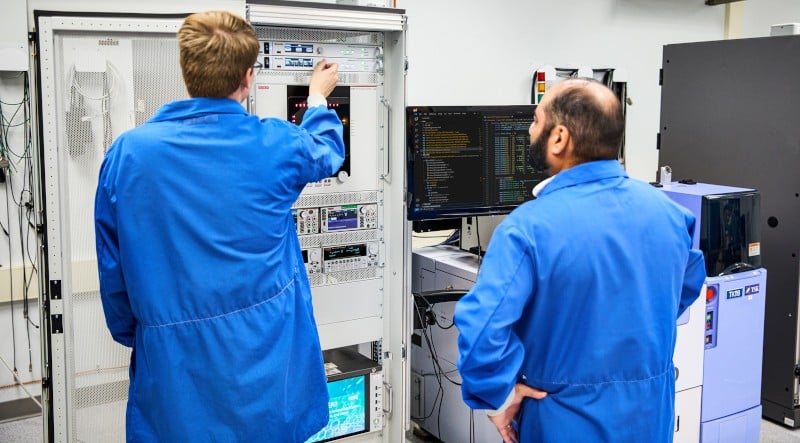
Halbleiter-Prüfingenieure stehen unter ständigem Druck, den Durchsatz und die Abdeckung zu erhöhen, ohne die Messgenauigkeit oder Gerätesicherheit zu beeinträchtigen. Eine Erhöhung der Kanalanzahl kann zur Steigerung des Durchsatzes – durch das parallele Testen mehrerer Prüflinge – und auch der Abdeckung beitragen. Es stellen sich jedoch mehrere technische Herausforderungen, wenn Ingenieure Mehrkanal-, Hochpräzisions-Testsysteme skalieren:
• Verwaltung von mehr Kanälen und mehr Instrumenten
• Präzisere Zeitkoordinierung zwischen Quellen und Messungen
• Nutzung von KI und modernen Tools für eine effiziente Softwareentwicklung
• Aufrechterhaltung oder Verbesserung der Messgenauigkeit
Das modulare Präzisionsprüfsystem der Tektronix MP5000-Serie wurde mit bedeutenden Innovationen entwickelt, um Prüfingenieure bei der Bewältigung dieser Herausforderungen speziell für diese Realität zu unterstützen. :
1. Hohe Kanaldichte zur besseren Verwaltung des Rackplatzes
2. Flexible Skripterstellung auf dem Gerät für reduzierten Kommunikationsaufwand
3. Erweiterte Trigger- und Sequenzierungsfunktionen für deterministisches Timing
4. Hardware-Cross-Triggerung und -Synchronisierung
Dieser Beitrag erklärt, wie sie funktionieren und wie sie zu Durchsatz und Abdeckung bei der Halbleiterprüfung beitragen. Es wird auch erklärt, wie der MP5000 und der 3706A Systemschalter/Multimeter zusammen verwendet werden können, um Systeme weiter zu skalieren.
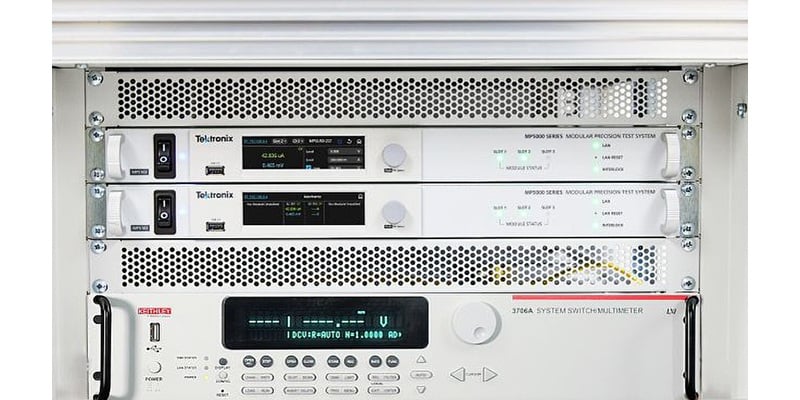
Modulares Präzisionsprüfsystem der MP5000-Serie im Rack mit dem 3706A, bereit für hochkanalige Schaltanwendungen
Hohe Kanaldichte
Das Herzstück der MP5000-Serie ist eine modulare Architektur mit hoher Dichte. Ein einzelnes MP5103 1U Mainframe kann bis zu drei modulare Source Measure Unit- oder PSU-Module aufnehmen und bietet so bis zu sechs völlig unabhängige Kanäle in einem kompakten Format (1U Rackhöhe). Diese Kanäle sind nicht nur unabhängig – sie sind darauf ausgelegt, parallel mit präziser Zeitsteuerung zu arbeiten.
Skripterstellung auf dem Gerät für weniger Kommunikationsaufwand
Der MP5000-Mainframe verfügt über einen integrierten Test Script Processor (TSP), der jedes der im Instrument enthaltenen Instrumente und Kanäle steuern kann. Diese im Mainframe integrierte Fähigkeit reduziert einen Großteil des Verwaltungsaufwands zwischen Host und Instrumentierung, der in Systemen mit hoher Kanalanzahl stark ansteigen kann.
Und da die Testausführung auf Geräteebene unter Verwendung der TSP-Technologie erfolgt, können große Datensätze effizient gesammelt werden, ohne Kommunikationsbusse zu überlasten oder den Durchsatz zu verlangsamen.
Die Tektronix TSP Toolkit-Erweiterung für Visual Studio Code ermöglicht es Benutzern, benutzerdefinierte TSP-Testsequenzen schneller zu erstellen, sich problemlos in komplexe Systeme zu integrieren und die volle Kontrolle über TSP-fähige Geräte zu übernehmen. Mit Funktionen wie Echtzeit-Fehlerprüfung, intelligenter Autovervollständigung, Inline-Hilfe, einem geräteinternen Debugger, Datenexport, automatisierter Skriptgenerierung und TriggerFlow™ für die Erstellung von Trigger-Modellen verwandelt das TSP Toolkit die TSP-Skripterstellung in ein leistungsstarkes, intuitives Erlebnis.
Deterministische Synchronisierung und Sequenzierung
Das Hinzufügen einer Zeitsteuerung im Testsystem reduziert die Belastung für den Host und den Prüfingenieur, die Synchronisierung und Zeitsteuerung im benutzerdefinierten Prüfcode aufrechtzuerhalten. Der wichtigste Faktor ist TriggerFlow®, das vollständig anpassbare Triggermodell des MP5000. Im Gegensatz zu festen oder starren Triggerschemata ermöglicht TriggerFlow Ingenieuren, die Testausführung als flussdiagrammartige Abfolge von Aktionen zu definieren. Durch die Verwendung einer Kombination aus Benachrichtigungs-, Warte-, Verzögerungs-, Quellen-, Mess- und Verzweigungsblöcken können Benutzer Aktionen über Kanäle hinweg mit deterministischer Zeitsteuerung koordinieren und ohne auf komplexe PC-seitige Steuerungsschleifen angewiesen zu sein.
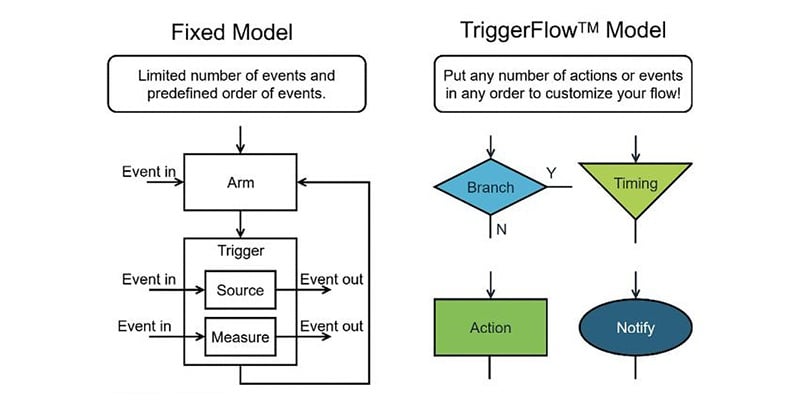
Festes Ereignismodell im Vergleich zu einem TriggerFlow-Ereignismodell
Dieser Ansatz reduziert die Testlatenz und den Jitter drastisch. Kanäle können Messungen genau dann beginnen, wenn ein anderer Kanal einen Stimulusschritt abgeschlossen hat, was eng synchronisierte parallele Tests ermöglicht.
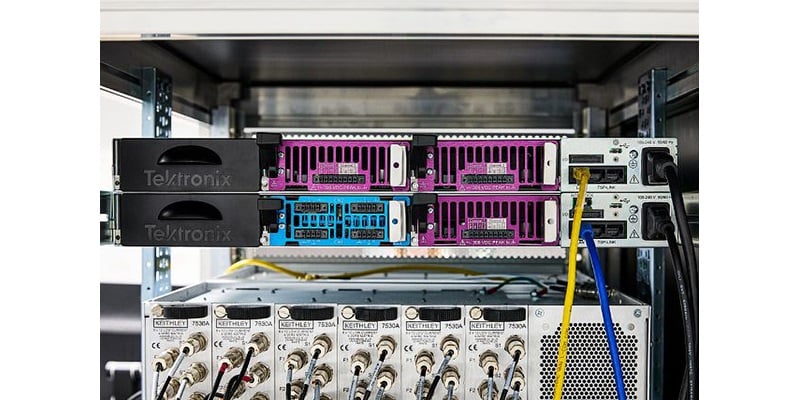
Rückansicht von 2 MP5000-Mainframes mit zwei PSU-Modulen und 1 Source Measure Unit-Modul, bereit für Tests mit hoher Kanalanzahl
Bei parallelen Tests von Mehrstift- oder Mehranschlussgeräten muss oft die Stromversorgung mehrerer Leitungen oder Geräteanschlüsse gleichzeitig erfolgen, was eine kontrollierte Leistungssequenzierung unerlässlich macht. Unsachgemäßes Ein- oder Ausschalten kann zu unvorhersehbaren Gerätezuständen, übermäßigem Einschaltstrom oder dauerhaften Prüflingsschäden führen.
Bei Konfiguration mit MPSU50-2ST Stromversorgungsmodulen bietet das MP5000 eine präzise Steuerung sowohl der Zeitsteuerung als auch der Anstiegsrate jeder Stromschiene. Mit TriggerFlow kann jeder Kanal in einer definierten Reihenfolge ein- oder ausgeschaltet werden, mit programmierbaren Verzögerungen und Anstiegsraten, um den Einschaltstrom zu steuern und die Spannungsstabilität am Prüfling zu gewährleisten.
Diese Sequenzierungsfunktion ist vollständig in das Testsystem integriert, wodurch externe Sequenzer, PMICs oder diskrete FET-Schaltkreise überflüssig werden, was das Systemdesign vereinfacht und gleichzeitig die Wiederholgenauigkeit verbessert.
Skalierung über den Mainframe hinaus mit TSP-Link Cross-Triggering und Synchronisation
Und wenn Anwendungen noch höhere Gerätezahlen erfordern, können mehrere MP5000-Mainframes miteinander synchronisiert werden. Das MP5000 umfasst den TSP-Link Hochgeschwindigkeits-Synchronisierungs- und Kommunikationsbus. Dies ermöglicht es mehreren Mainframes, als einheitliches System zu arbeiten. Es unterstützt deterministisches Triggering, Koordination auf Geräteebene und skalierbare Mehrkanaltests ohne Abhängigkeit von kontinuierlicher PC-Steuerung.
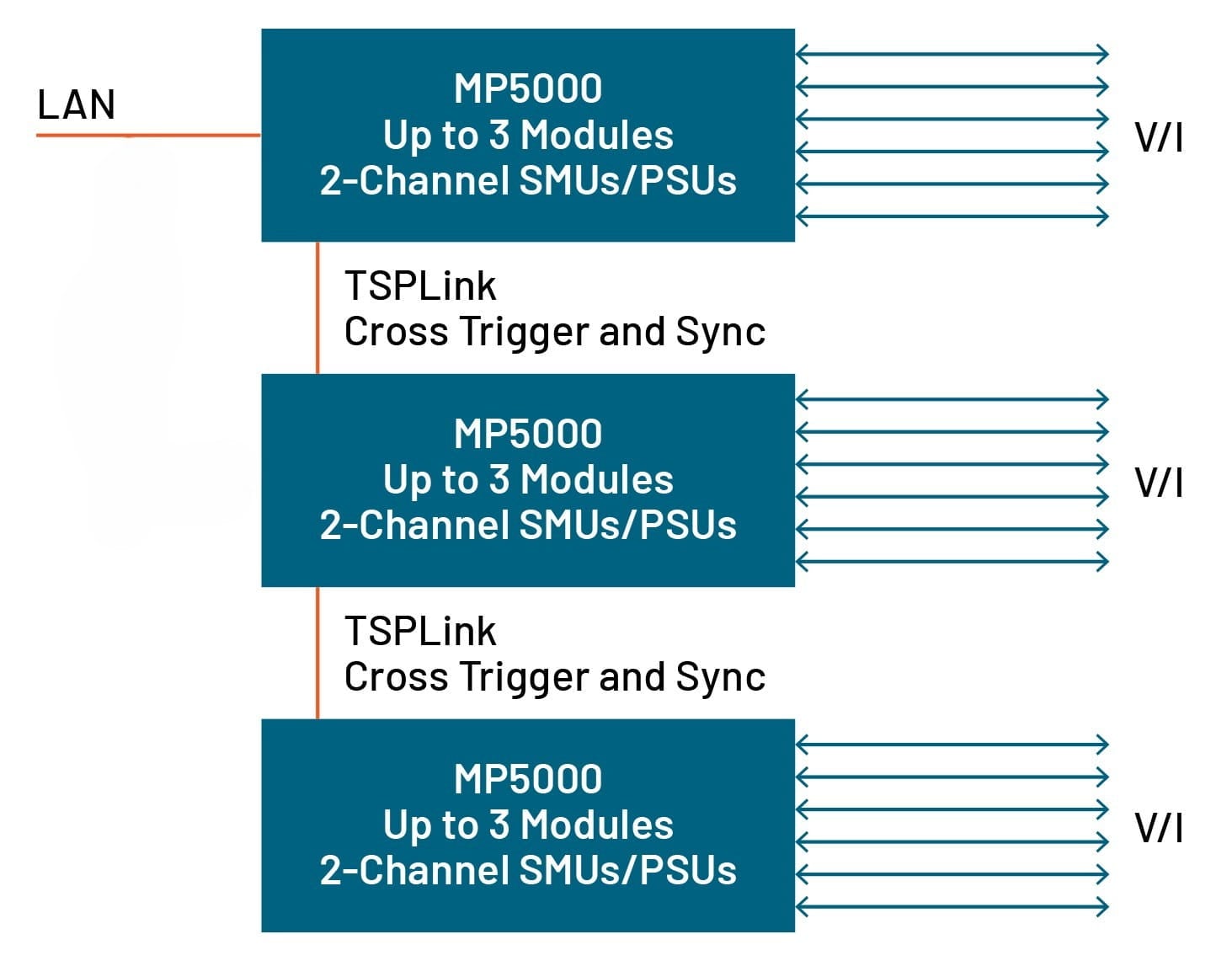
TSP Link zeigt die digitale Verbindung von 3 Mainframes der MP5000-Serie, die physisch verbunden sind, um 18 Kanäle für parallele Tests zu ermöglichen.
TSP-Link ermöglicht es auch, das MP5000 mit Keithley 3706A Schaltsystemen zu koppeln, um wirklich groß angelegte parallele Tests und kostengünstige Lösungen freizuschalten. Der 3706A verfügt über Steckplätze für bis zu sechs Schaltkarten mit verfügbarer Multiplexer-Topologie. Zusätzlich verfügt der 3706A über ein 7,5-stelliges Multimeter für zusätzliche Flexibilität bei der Implementierung von Testsystemen. Dieses Schalt-Mainframe koordiniert sich über unser TSP-LINK für Kommunikation und Triggerung problemlos mit dem MP5000, um eine präzise Zeitsteuerung zwischen Schalten und Sourcing oder Messen zu gewährleisten.
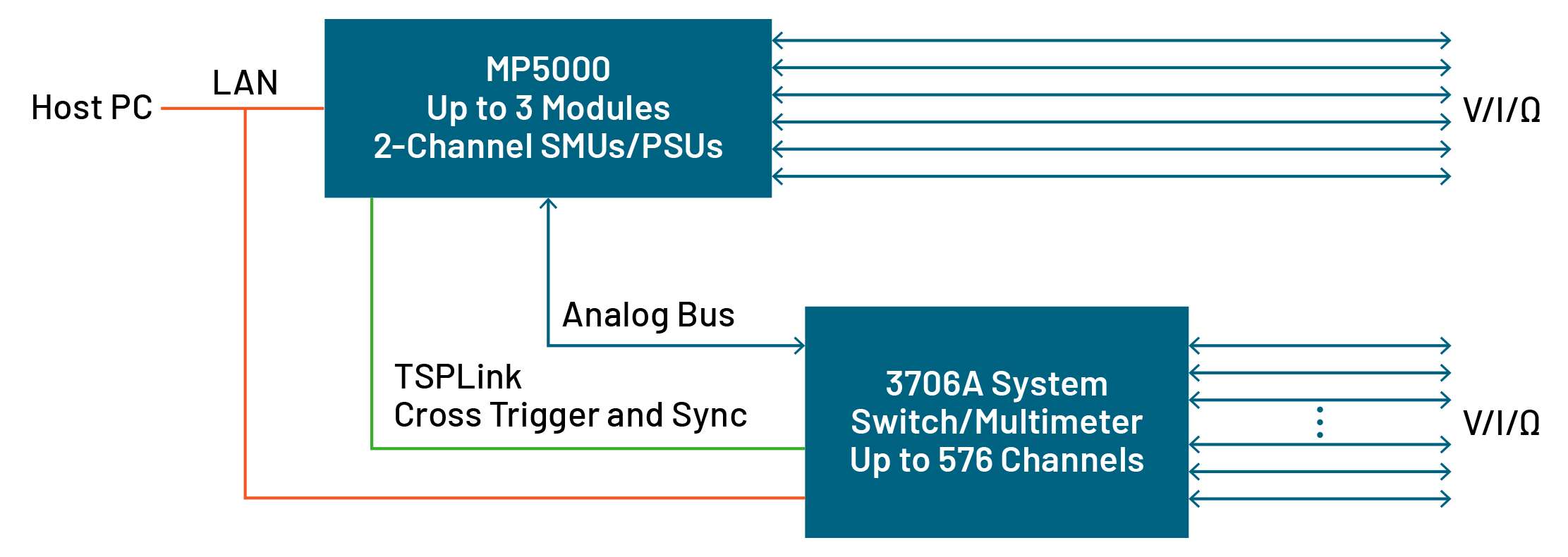
Die TSP Toolkit Software zeigt die digitale Verbindung eines MP5000 und eine 3706A Hardwareverbindung für parallele Tests und Schaltanwendungen
Für Anwendungen, die das parallele Testen von Dutzenden oder sogar Hunderten von Geräten erfordern, wird die Umschaltung zu einem kritischen Teil der Architektur, und die Kosten sind entscheidend. Hier spielt die Keithley-Schalttechnik eine ergänzende Rolle.
Der 3706A, der in Umgebungen für die Halbleiterzuverlässigkeit und -charakterisierung häufig zum Einsatz kommt, ermöglicht das Routing von Source Measure Unit-Ausgängen und Messungen mit hoher Kanalanzahl an große Prüflings-Arrays. In Zuverlässigkeits-Testszenarien kann ein einzelnes Hochleistungs-Source Measure Unit [oder Netzgerät] viele Bauteile parallel vorspannen, während Schaltmatrizen Präzisions-Messkanäle sequenziell zu jedem Prüfling leiten können, um Leckströme, Schwellwertverschiebungen oder parametrische Änderungen über die Zeit zu erfassen.
Da sowohl das MP5000 als auch das [Schalt-]3706A die TSP- und TSP-Link®-Technologien nutzen, können sie innerhalb einer einheitlichen Testarchitektur synchronisiert werden. Die Skripterstellung auf Instrumentenebene ermöglicht die koordinierte Steuerung von Quell-, Schalt- und Messvorgängen und unterstützt groß angelegte Paralleltests, ohne die Genauigkeit oder Zeitdeterminiertheit zu beeinträchtigen.
Ein flexibler Weg von der Validierung zur Produktion
Eine der Stärken des MP5000-Ökosystems ist seine einfache Skalierbarkeit. Ingenieure können mit einem eigenständigen MP5000-System für Validierung oder Charakterisierung beginnen und dann erweitern:
• Kanalübergreifend innerhalb eines einzelnen Mainframes
• Mainframe-übergreifend mit TSP-Link (bis zu 32 synchronisierte Systeme)
• Über Geräte hinweg unter Verwendung von High-Density-Schaltsystemen wie dem 3706A
Diese Flexibilität ermöglicht es, dass sich Teststrategien parallel zu den Produktlebenszyklen entwickeln, ohne eine vollständige Neugestaltung der Testinfrastruktur zu erzwingen.
Fazit
Hochkanalige, parallele Tests sind in der modernen Halbleiterprüfung nicht länger optional, sondern unerlässlich. Das modulare Präzisionsprüfsystem der MP5000-Serie bietet die Zeitsteuerung, Kanaldichte und architektonische Skalierbarkeit, die zur Erfüllung der heutigen Durchsatzanforderungen erforderlich sind. In Kombination mit bewährten Schaltsystemen wie dem Keithley 3706A wird es zu einer kostengünstigen, leistungsstarken Plattform, die alles von der frühen Charakterisierung bis hin zu hochvolumigen Zuverlässigkeitstests unterstützt.
Durch die Vereinigung von Präzisionsmessung, synchronisierter Ausführung und skalierbarem Systemdesign hilft das MP5000 Ingenieuren, den Durchsatz zu steigern, ohne die Daten zu kompromittieren, auf die sie angewiesen sind.