Tektronix » USB 2.0 » Electrical Validation

USB 2.0 FAQ's

  1. What is USB?
  2. What is the difference between USB 1.0 and USB 2.0?
  3. How does the end user benefit from USB 2.0?
  4. What is Tektronix role in USB?
  5. What are the best applications for USB?
  6. How many USB peripherals can I connect at once?
  7. Where can I learn more technical details about USB?
  8. What does it mean when a product is USB compliant and why should I care?
  9. Are all the tests included in TDSUSB2 required by the USB-IF for compliance?

1. What is USB?

Universal Serial Bus (USB) is a connectivity specification developed by the USB Promoter Group. USB is aimed at peripherals connecting outside the computer in order to eliminate the hassle of opening the computer case for installing cards needed for certain devices. USB provides for ease of use, expandability, and speed for the end user. Whole ranges of USB peripheral devices are available including joysticks, scanners, digital speakers, digital cameras, printers, and PC telephones to name a few. PC peripheral vendors now have an ease way for consumers to add new capabilities instantly without having to open the PC, set dip switches, worry about IRQ settings, or install add-in cards. USB Hot Swapping permits the PC owner to add new devices without having to shut down and restart the PC. The USB-compliant PC recognizes the new USB device and configures the software.

Up to top


2. What is the difference between USB 1.0 and USB 2.0?

The USB Specification version 2.0, drafted by Compaq, Hewlett Packard, Intel, Lucent, Microsoft, NEC and Philips will increase device data rates to a maximum 480 Mb/s, 40 times faster than USB 1.1 devices.

Up to top


3. How does the end user benefit from USB 2.0?

With the increased data bus speed, computer consumers will benefit from an additional range of high performance peripherals. Even with multiple high-speed peripherals connected to a USB 2.0 bus, they will not have to worry about hitting the bandwidth bottleneck. The new specification also inherits the current USB’s Plug and Play and hot-swapping capability as well as providing backward compatibility for USB 1.1 hardware.

Up to top


4. What is Tektronix role in USB?

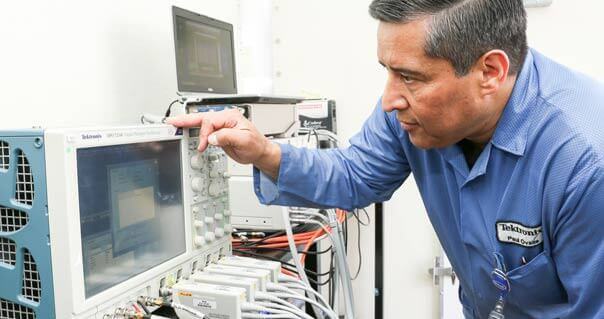
Tektronix, a leading supplier of test, measurement, and monitoring equipment plays an important supporting role in design, debug, and compliance testing of USB devices. Tektronix oscilloscopes, probes, and signal sources are frequently used by the USB-IF during USB Plugfest gatherings to provide important feedback to device designers seeking USB compliance certification.

Up to top


5. What are the best applications for USB?

USB plays a key role in three fast-growing areas: digital imaging, PC telephony and multimedia games. The presence of USB means that PCs and peripherals will work together, with a high degree of reliability, in these exciting new application areas. USB opens the door to new levels of innovation and ease of use for input devices, such as the new generation of "force-feedback" digital joysticks. There are also brand new opportunities for all types of peripherals from printers to scanners to high-speed communications such as Ethernet, DSL, ISDN or satellite communications.

Up to top


6. How many USB peripherals can I connect at once?

Technically, you can connect up to 127 individual USB peripherals at one time. Due to the fact that some devices reserve USB bandwidth, the practical maximum of devices is less than the theoretical maximum. However, PCI-USB add-in cards provide an independent USB bus to which even more peripherals can be connected.

Up to top


7. Where can I learn more technical details about USB?

Technical presentations and other details are available from the USB Implementers Forum on the USB developers site, as well as directly from USB-IF member companies.

Up to top


8. What does it mean when a product is USB compliant and why should I care?

Compliance means products that are called USB products are really built to match the description in the USB specification. This is important to consumers because if all products are in compliance with the specification they would by definition work together perfectly. Compliance testing exists to help manufacturers measure how well their products match the specification. There are many ways to make sure products work together and many ways to see if they match the specification, but compliance testing is one of the most useful. Conscientious manufacturers do a great deal of testing on their own and use compliance test programs like the one sponsored by the USB-IF organization. Click here to learn more about compliance testing.

Up to top


9. Are all the tests included in TDSUSB2 required by the USB-IF for compliance?

The USB-IF have defined a limited set of electrical tests based on the USB Specification version 2.0 that constitute the compliance test suite. Tektronix TDSUSB2 software solution includes these tests plus additional informational tests that our users find valuable in evaluating their product. Examples of these added value and informational tests are rise/fall time and monotonicity tests.

Up to top