Tektronix » Digital Video Interface » Choosing the Right Oscilloscope

Choosing the right oscilloscope

A good set of tools is the key to dependable, repeatable and reliable testing. System bandwidth and rise-time are the obvious considerations when choosing a compliance test solution. This section provides insight into various aspects of DVI compliance testing and how they influence the choice of tools.

Bandwidth and Rise-time

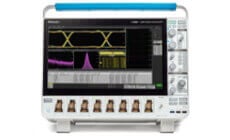
DVI specification defines rise-time from 20% - 80%. This is the rise-time of the differential signal as it transitions from 20% to 80% of its differential amplitude. It is important to make sure that the oscilloscope can handle rise-times of the given order. The required rise-time of the oscilloscope should be at least three times faster than that of the signal rise-time. DVI typically (up to UXGA) encounters rise-times of the order of 250 ps to 300 ps. Hence, an oscilloscope with a rise-time of about 70 ps to 100 ps is the best tool for DVI conformance testing. TDS/CSA7404B and TDS6604B offer bandwidths of 4 GHz and 6 GHz with rise times of 100 ps and 70 ps, respectively.

Acquisition Speed

DVI specification for eye testing (Method II) recommends acquiring a million acquisitions for creating the worst-case jitter condition in the eye diagram. Using a digital storage oscilloscope might take the user about an hour to accumulate one million acquisitions. A Digital Phosphor Oscilloscope (DPO) in FastAcq mode acquires a million acquisitions in less than 10 seconds and hence allows performing compliance testing quickly. TDS7404B and CSA7404B Digital Phosphor Oscilloscopes offer a bandwidth of 4 GHz and acquisition speed up to 400,000 waveforms per second and hence quicken the entire test process.

DVI data rates vary from 0.25 Gbps to 1.65 Gbps. TDS/CSA7404B digital phosphor oscilloscopes offer a bandwidth of 4 GHz and acquisition speed of greater than 400,000 waveforms per second to quicken the entire test process.